 Clinical evidence and questions
OpenEvidence
Medical search and clinical decision-support AI that synthesizes peer-reviewed evidence for clinicians.
Last updated: May 25, 2026
Back to directoryAI research assistant built around verified citation statements and citation context.
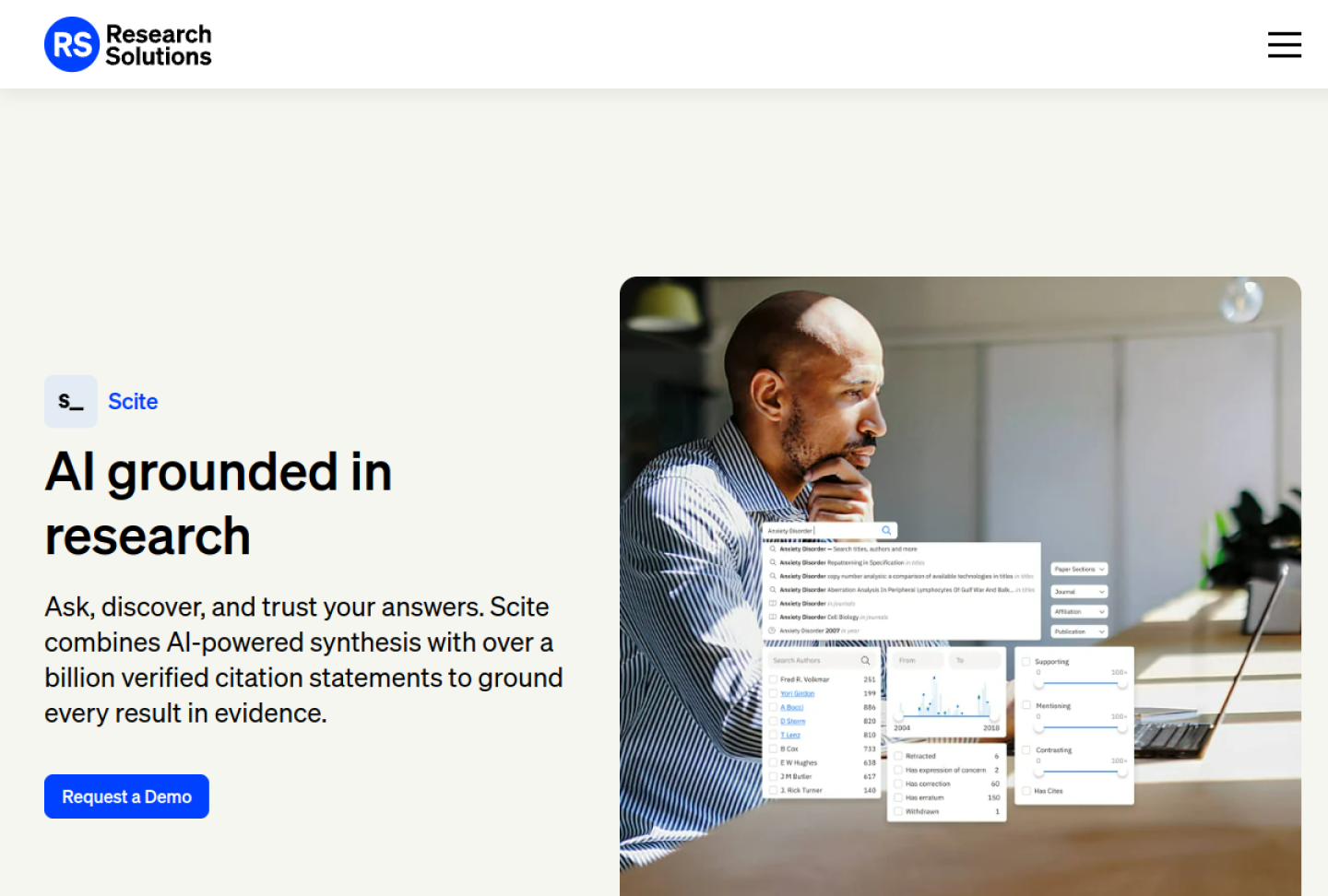
Checking how a paper or claim is cited across the literature.
Compare within workflow: Clinical evidence and questions · comparison shortlist · source index
product-specific source-backed lens: These product-specific signals summarize what the cited sources imply before treating Scite as safe for a local clinical, operational, or research workflow.
| Regulatory / FDA | Treat as research support and citation-context analysis, not clinical decision support. |
|---|---|
| Privacy | Avoid uploading PHI or confidential manuscripts unless the subscription and privacy terms cover that workflow. |
| Evidence | Check coverage for the specialty, how citation statements are classified, and whether assistant summaries match the cited source context. |
| Workflow | Best for claim checking, literature mapping, and manuscript review where humans still appraise study quality and clinical relevance. |
Research Solutions says Scite grounds AI-powered synthesis in verified citation statements and citation context through Scite Assistant.
Not for: Replacing critical appraisal, guideline review, or clinical judgment.
Use these links to confirm current claims, terms, regulatory status, pricing, and deployment requirements.
Clinical evidence and questions
Medical search and clinical decision-support AI that synthesizes peer-reviewed evidence for clinicians.
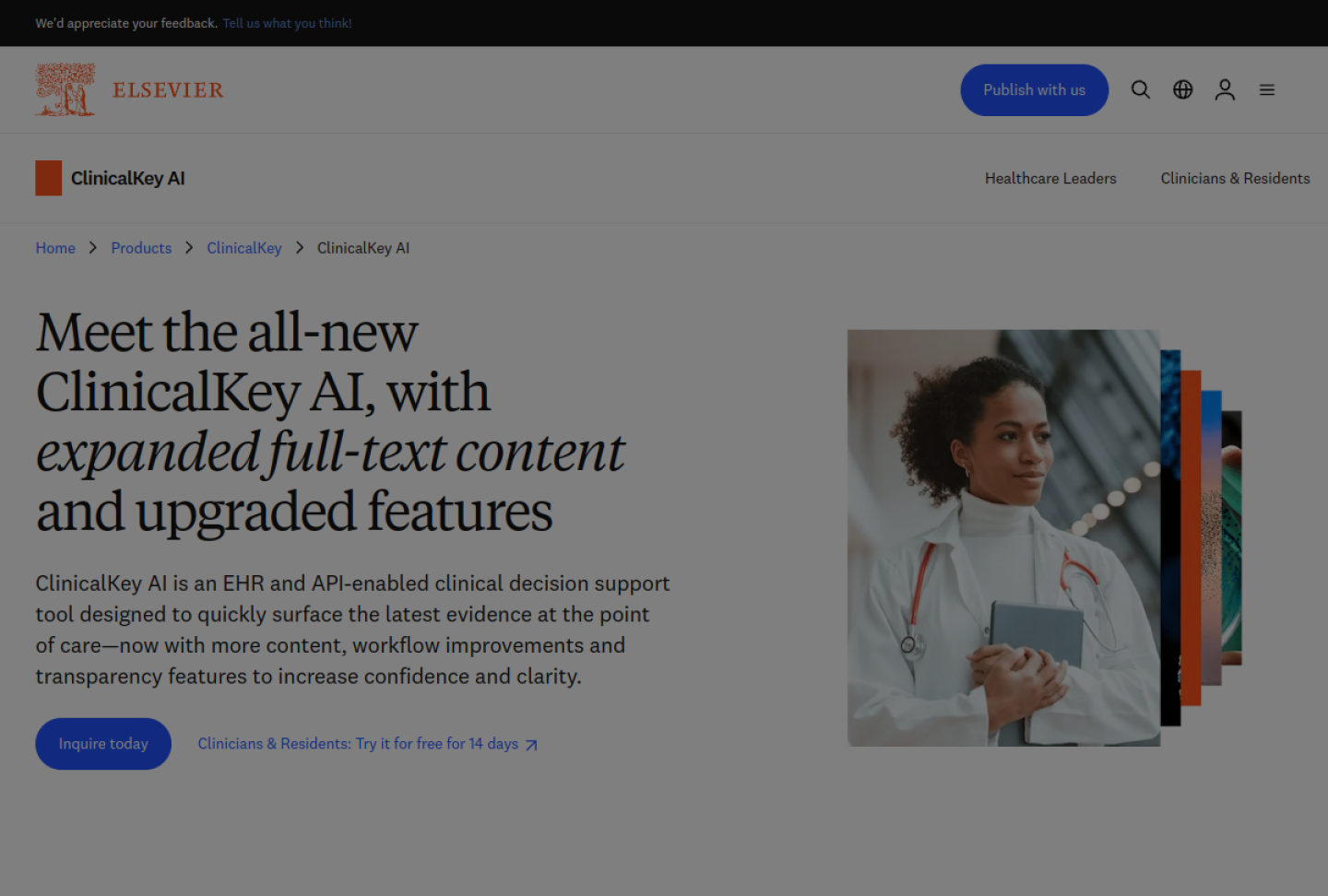 Clinical evidence and questions
Elsevier clinical decision-support product that combines conversational search with evidence-based content and cited references.
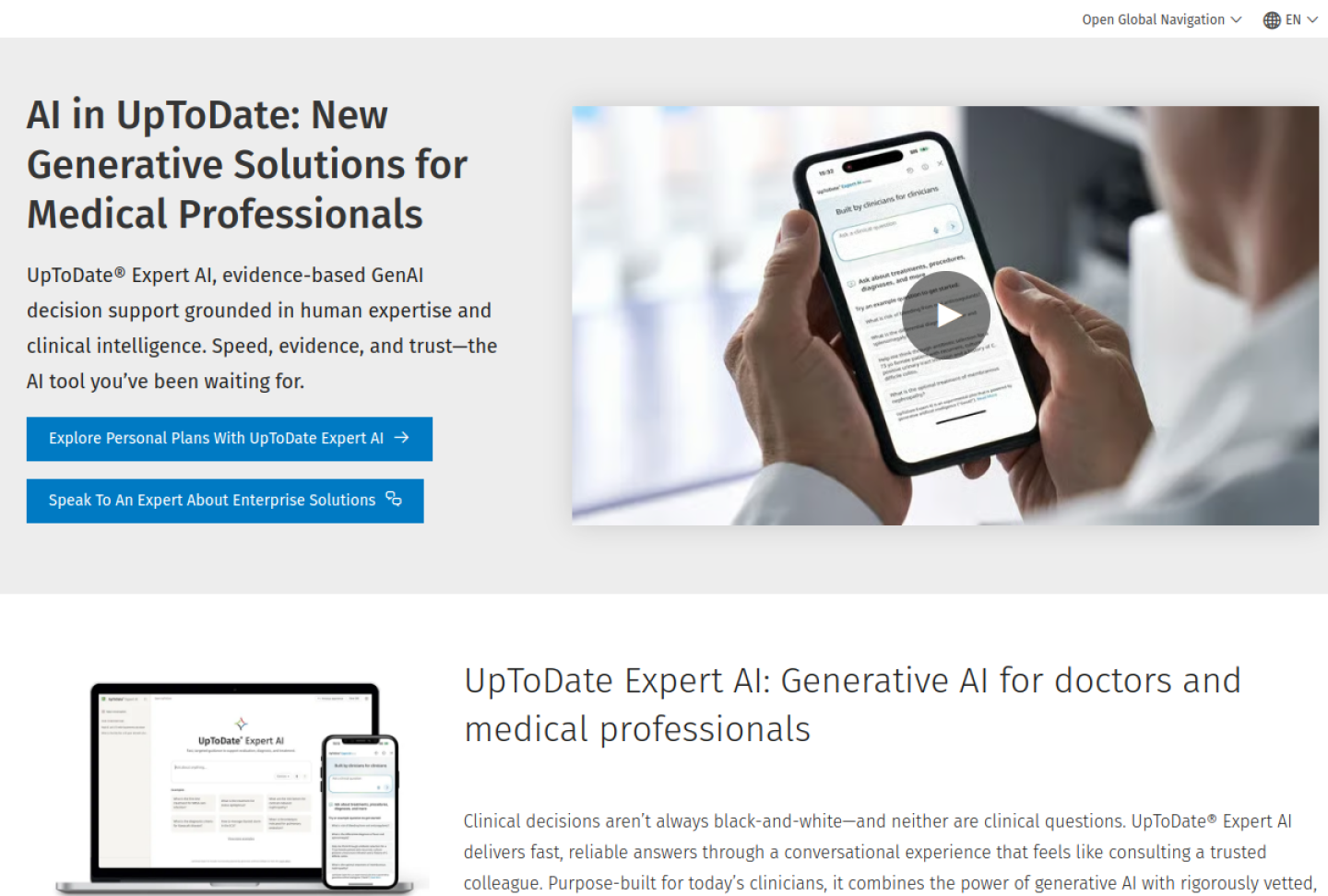 Clinical evidence and questions
Generative AI clinical decision-support experience built on UpToDate content with traceable answers, assumptions, and source links.
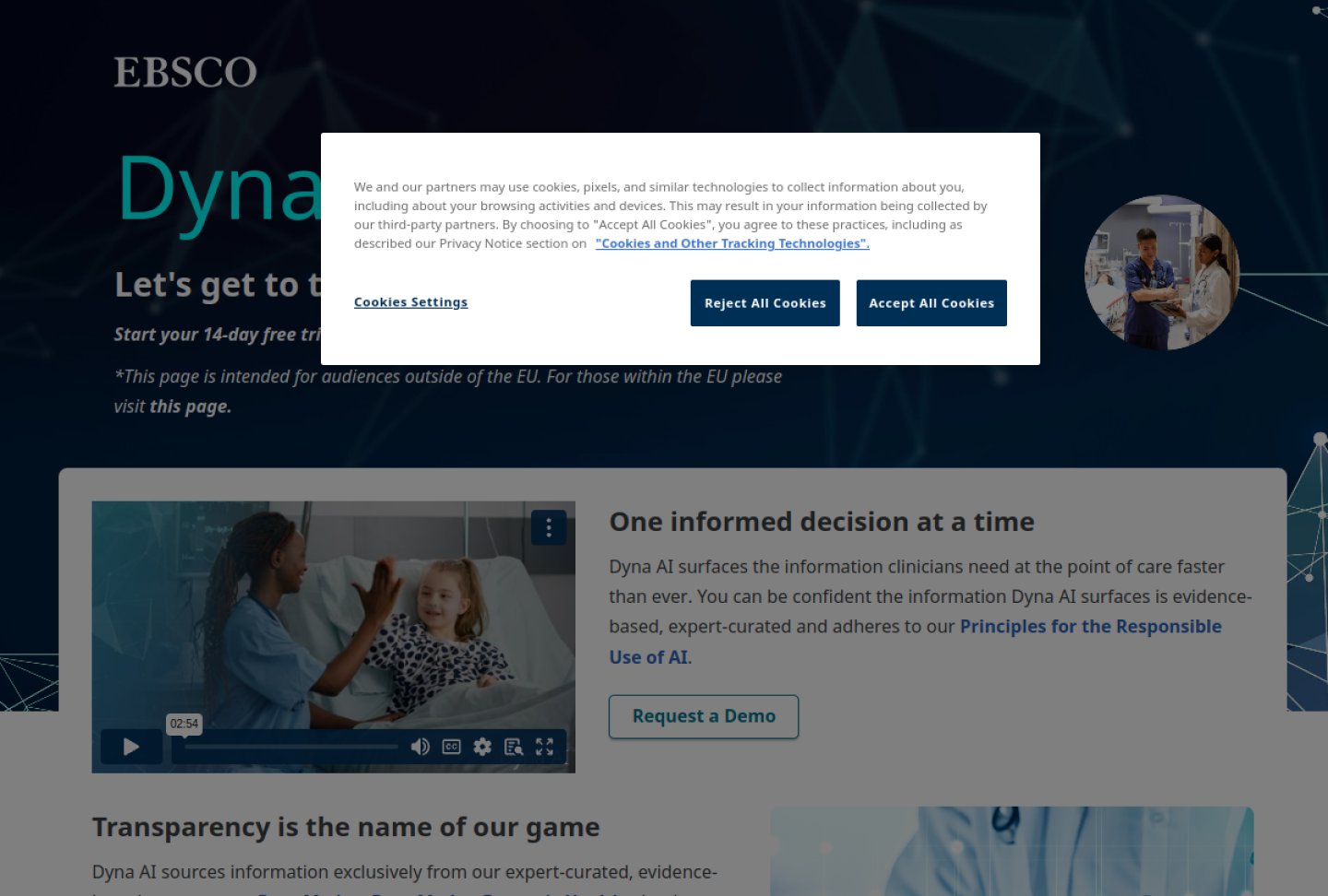 Clinical evidence and questions
AI mode for EBSCO clinical decision-support products that retrieves answers from expert-curated DynaMed, DynaMedex, and Dynamic Health content.