 Precision medicine and data
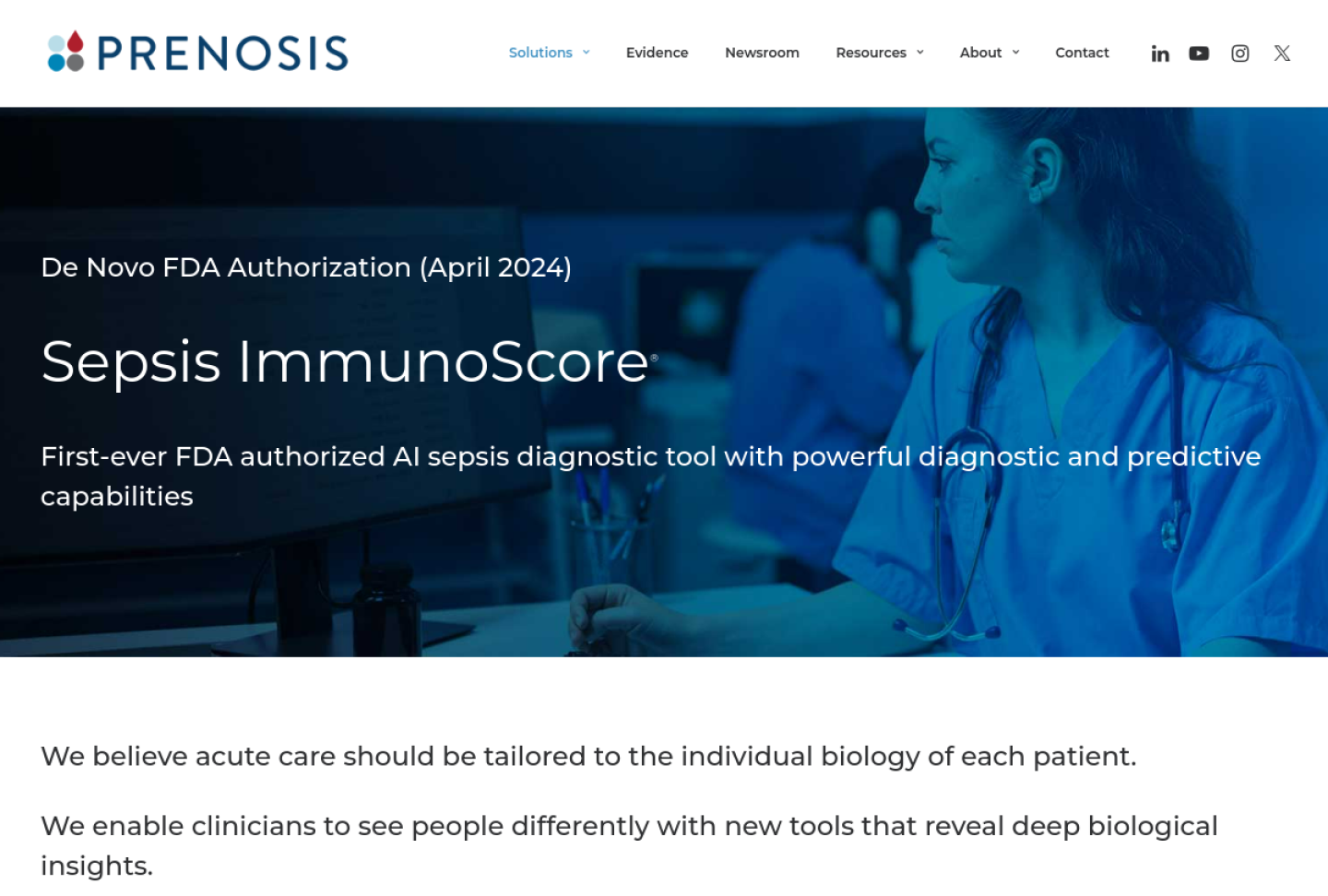
Prenosis Sepsis ImmunoScore
FDA De Novo-authorized AI/ML software that assigns adult emergency department or hospital patients to sepsis risk categories within a clinician-reviewed workflow.
Last updated: May 25, 2026
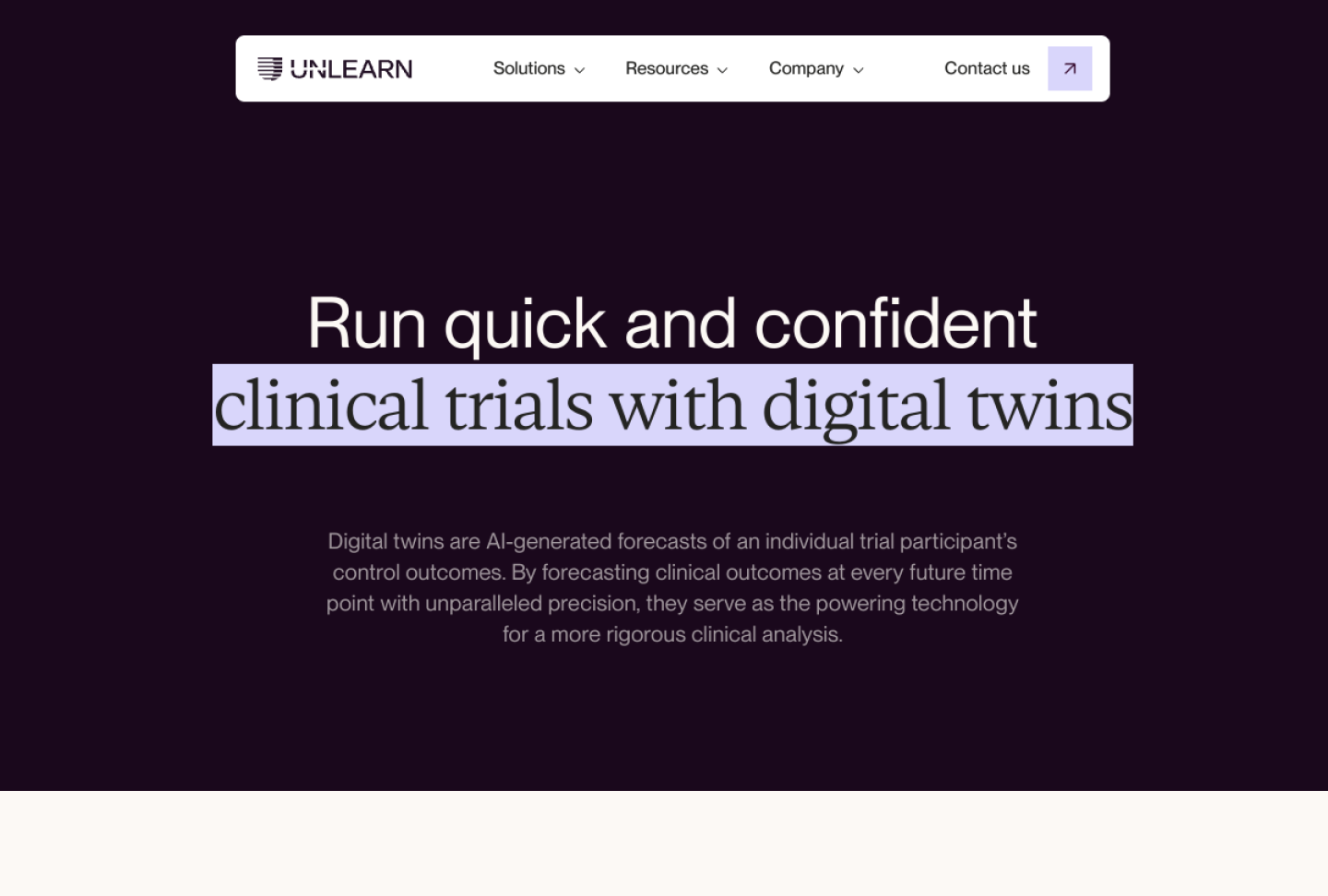
Back to directoryClinical-trial AI company using disease-specific machine learning models to generate participant-level digital twins for trial analysis.
Sponsors exploring smaller or more informative control arms, single-arm study context, interim looks, or trial power improvements with statistical review.
Compare within workflow: Precision medicine and data · comparison shortlist · source index
product-specific source-backed lens: These product-specific signals summarize what the cited sources imply before treating Unlearn as safe for a local clinical, operational, or research workflow.
| Regulatory / FDA | Treat as clinical trial methodology and evidence-generation infrastructure that needs protocol, SAP, ethics, sponsor, and regulator review before affecting enrollment or analysis. |
|---|---|
| Privacy | Review trial-participant data flows, baseline-variable scope, consent, de-identification, retention, transfers, automated-decision disclosures, and sponsor agreements. |
| Evidence | Inspect disease-model validation, calibration, external generalizability, uncertainty intervals, bias testing, and whether assumptions match the endpoint and population. |
| Workflow | Best used with biostatistical governance where digital-twin outputs are versioned, auditable, and reconciled with trial operations and regulatory commitments. |
Unlearn describes digital twins as AI-generated forecasts of individual trial participants' control outcomes using baseline data and historical clinical data; its privacy notice says AI is used to support clinical trial design and analysis rather than automated decisions about website visitors or customers.
Not for: Replacing randomized evidence, patient-level treatment decisions, or regulatory strategy without protocol-specific statistical, clinical, ethics, and agency review.
Use these links to confirm current claims, terms, regulatory status, pricing, and deployment requirements.
Precision medicine and data
FDA De Novo-authorized AI/ML software that assigns adult emergency department or hospital patients to sepsis risk categories within a clinician-reviewed workflow.
 Precision medicine and data
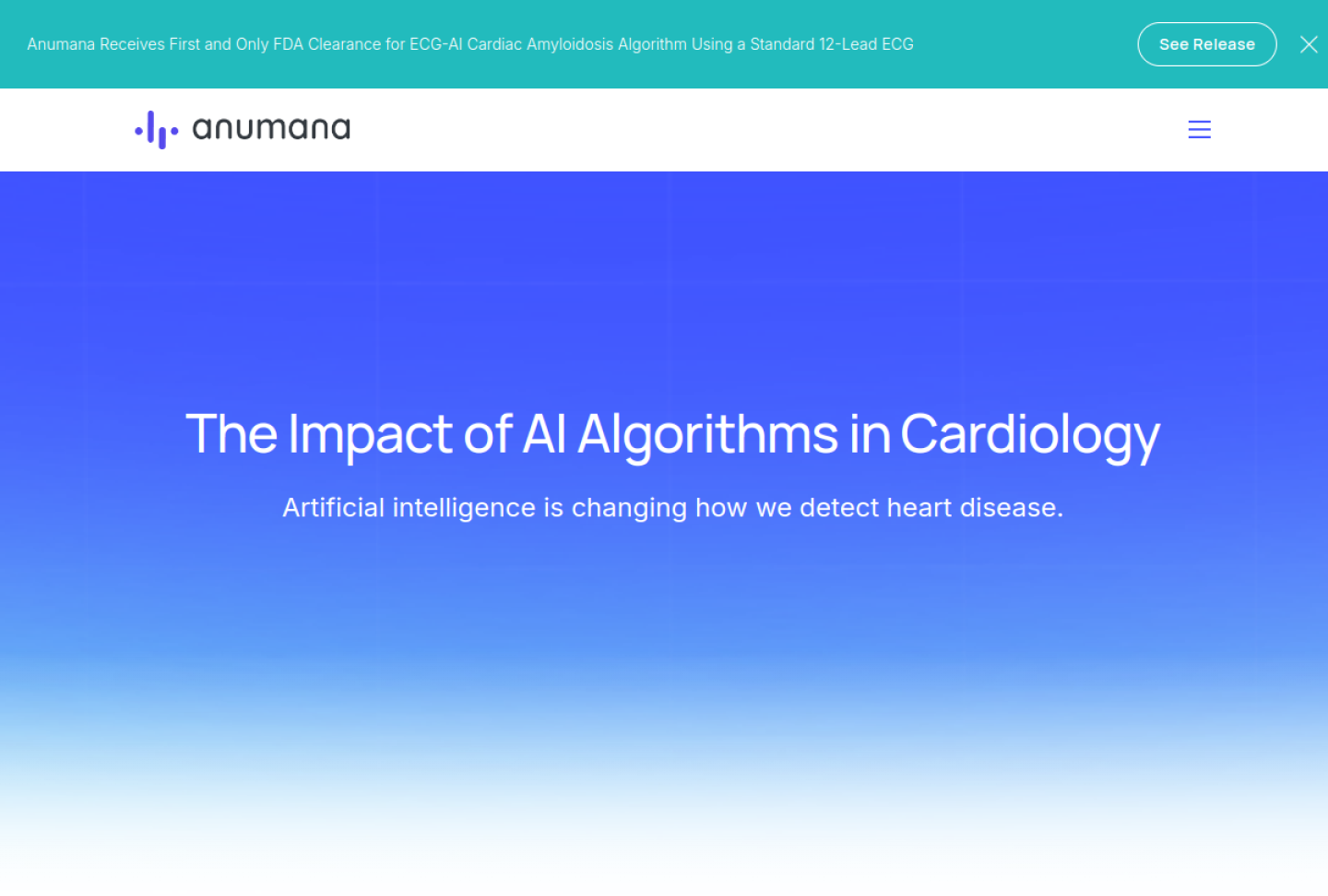
Cardiovascular AI platform using standard 12-lead ECGs to surface signals such as low ejection fraction, pulmonary hypertension, and cardiac amyloidosis for clinician follow-up.
 Precision medicine and data
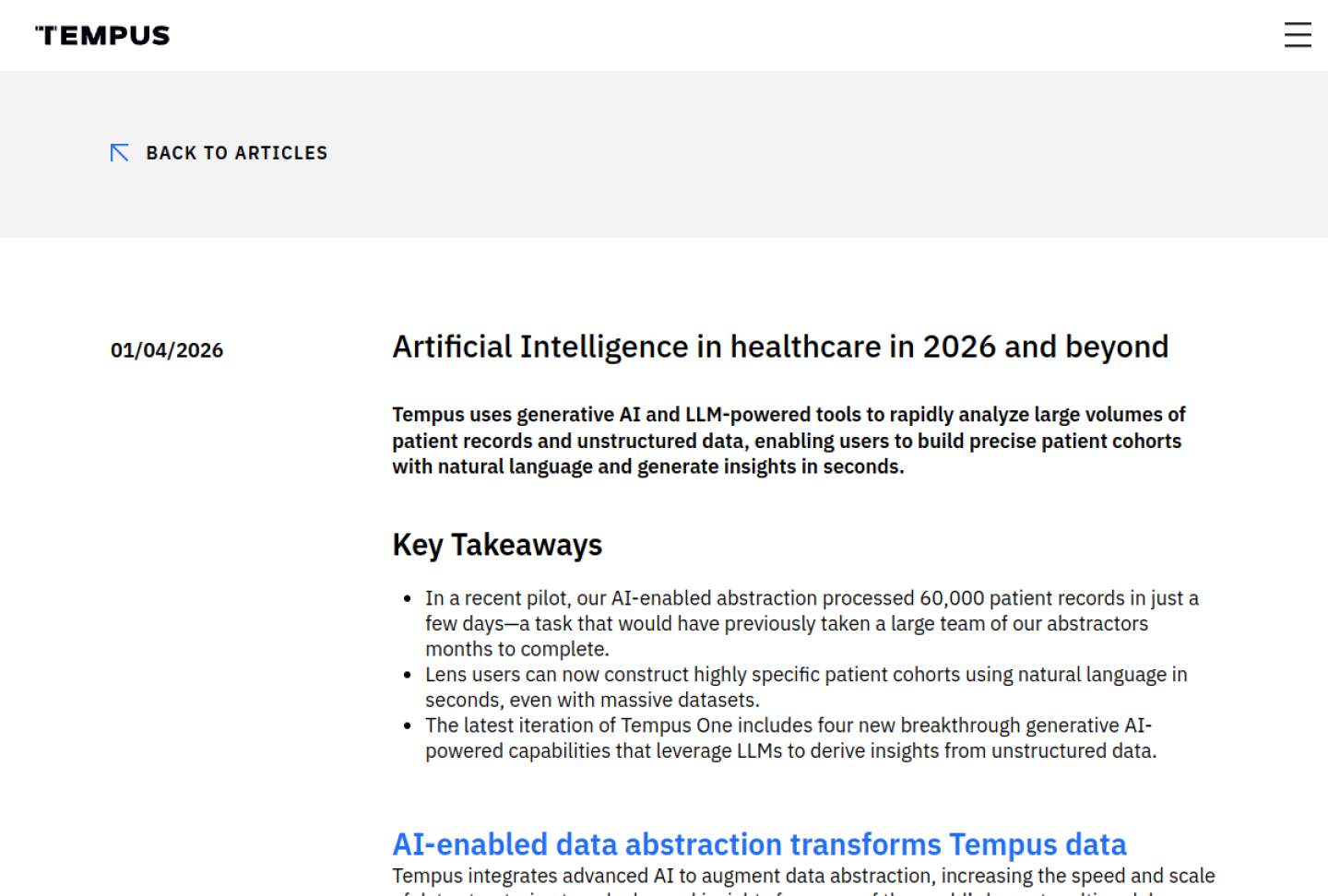
AI-enabled precision medicine platform spanning molecular testing, multimodal data, clinical assistants, care pathways, imaging insights, and trial matching.
 Precision medicine and data
AI-driven precision medicine platform for analyzing complex genomic, radiomic, and multimodal healthcare data.