AI for Utilization Management: Review and Denial Controls
Evaluate AI for utilization management by medical-necessity logic, reviewer workflow, payer-provider collaboration, audit trail, and appeal impact.
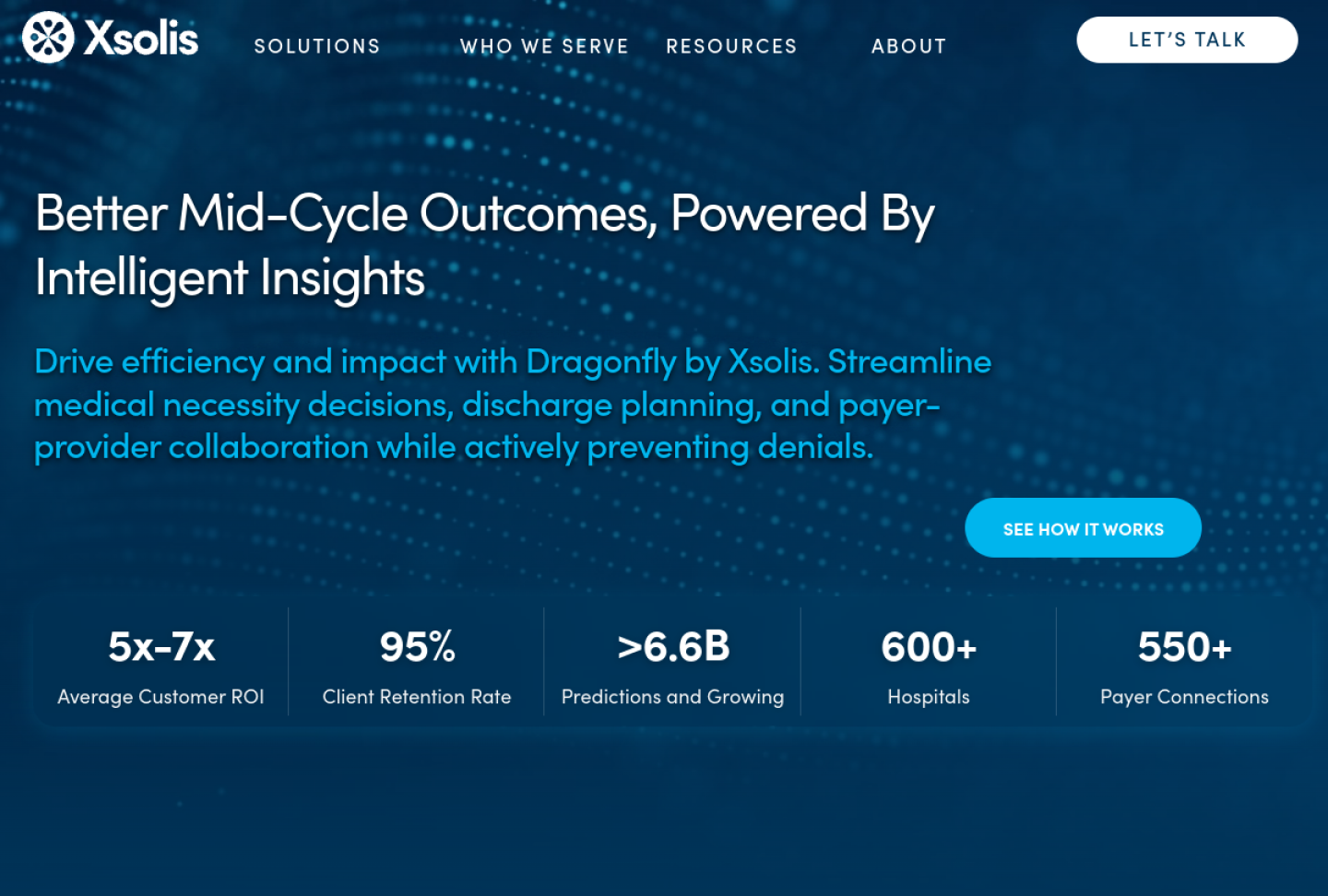
Representative source image: official Xsolis Dragonfly product page.
Quick answer: AI for utilization management can prioritize reviews, summarize records, estimate medical necessity, support concurrent authorization, and identify denial risk. It should remain human-reviewed, policy-traceable, auditable, and monitored for access, equity, and appeal outcomes.
Who this guide is for
Utilization review nurses, case management leaders, revenue cycle teams, physician advisors, health plans, and hospital operations executives.
What makes this workflow different
Utilization-management AI sits between clinical evidence, revenue integrity, payer policy, and patient access, so review boundaries and appeal controls matter as much as automation.
What to verify before using it
Define whether the tool supports admission review, continued stay, discharge planning, concurrent authorization, or appeal preparation.
Trace every recommendation to source clinical data, payer policy, and reviewer action.
Verify PHI sharing, payer-provider data exchange, BAA terms, retention, and audit logs.
Measure false positives, false negatives, denials, appeals, length of stay, and staff burden during a pilot.
Keep medical necessity and coverage decisions under accountable clinician or payer-review governance.
Risk level and safe use
Medical risk
Medium to high
Best first step
Write the workflow in one sentence, decide who reviews the AI output, and test with a small controlled pilot before expanding.
Recommended posture
Use AI as supervised workflow support. Verify sources, privacy, human review, and regulatory fit before relying on outputs.
Source-backed products for this workflow
These profiles are not rankings. They are starting points for checking vendor claims, privacy terms, FDA or regulatory posture, evidence, and workflow fit.
Xsolis describes Dragonfly as an AI-powered platform for utilization management, case management, revenue cycle, and payer-provider collaboration, with real-time clinical data, medical-necessity insights, generative summaries, and human-in-the-loop workflows.
Best for
Hospitals and payers trying to standardize utilization review, prioritize complex cases, reduce avoidable denials, and collaborate on medical necessity with human review.
First check
Whether the workflow is admission review, continued stay, concurrent authorization, discharge planning, appeal support, payment integrity, or payer-provider data sharing.
Cohere Health describes a clinical intelligence platform for AI-powered prior authorization, utilization management, payment integrity, and Cohere Unify workflows; its privacy policy says PHI on the password-restricted platform is governed by customer BAAs and that sensitive information is protected in transit and at rest.
Best for
Payers and delegated-risk organizations that need clinical policy automation, real-time authorization workflows, payment integrity review, and human oversight for complex cases.
First check
Which workflow is in scope: prior authorization, delegated utilization, API-based CMS-0057 compliance, payment integrity, appeals, or clinical policy review.
Iodine describes AwareCDI as an AI-powered clinical documentation integrity suite that continuously analyzes clinical notes to flag documentation gaps or inconsistencies; its privacy policy states that services can involve PHI under customer business associate agreements.
Best for
Health systems looking to prioritize CDI worklists and reduce documentation, coding, and reimbursement leakage with human review.
First check
Which Iodine workflow is in scope: AwareCDI, Concurrent, Retrospect, pre-bill, post-bill, or coding support.
Find the best AI for medical workflows by matching the tool to documentation, questions, diagnosis support, research, coding, billing, imaging, or practice operations.
Understand AI for medical diagnosis, including validation evidence, FDA status, clinical supervision, and why patient-specific diagnosis should not rely on general chatbots.