AI for Medical Writing: Source-Backed Drafting Guide
Use AI for medical writing, content authoring, research writing, and medical writer workflows with source verification and human review.
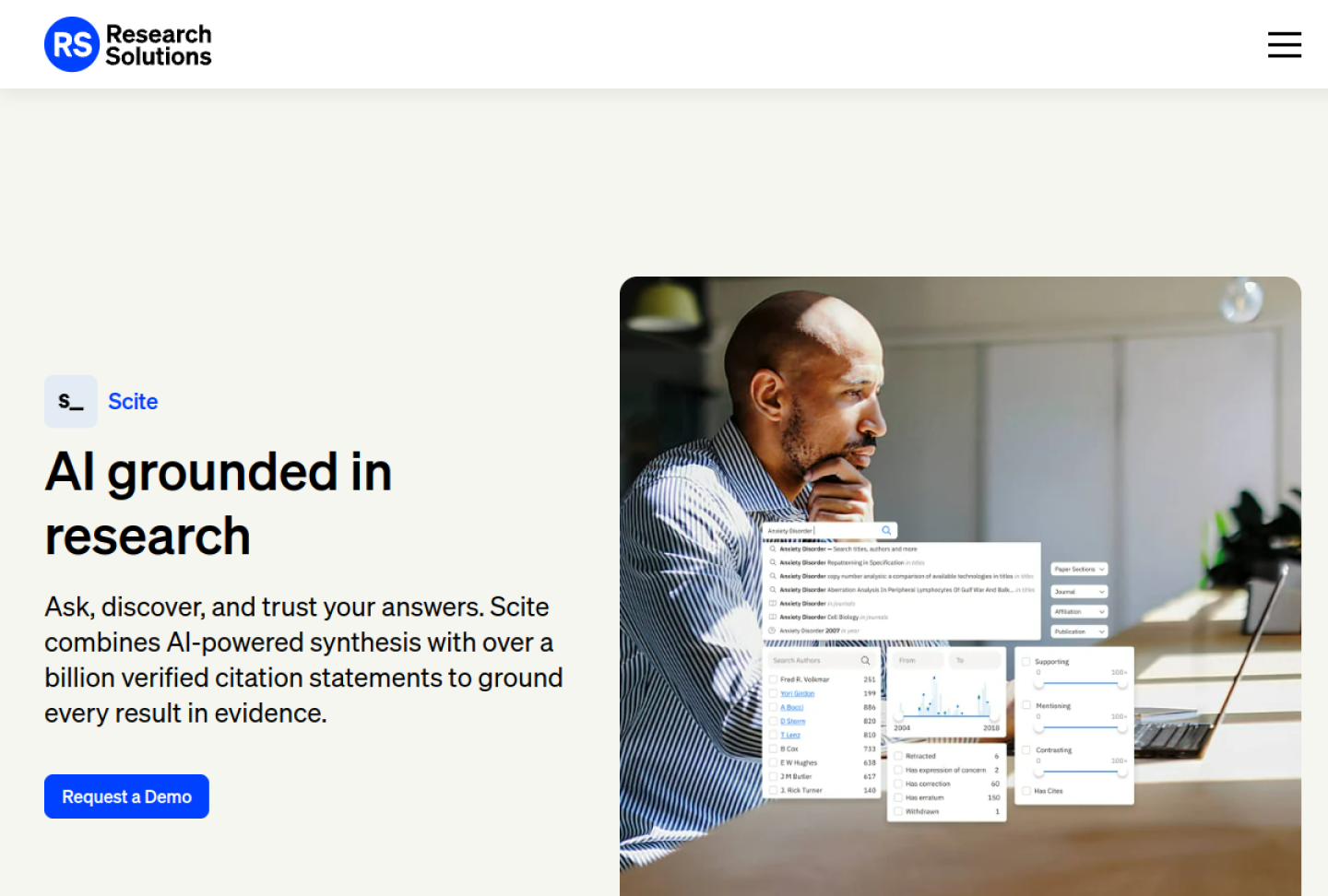
Representative source image: official Scite product page.
Quick answer: AI for medical writing can help outline, summarize, rewrite, and format content, but claims, citations, and medical accuracy need expert review. Strong workflows keep sources visible and separate drafting from final scientific judgment.
Who this guide is for
Medical writers, health content teams, researchers, and communications teams.
What makes this workflow different
Medical writing AI can speed drafting, but every claim and citation still needs expert review.
What to verify before using it
Verify every factual claim against authoritative sources.
Use source documents instead of unsupported prompts.
Follow publication, disclosure, and authorship rules.
Avoid generating patient-specific advice.
Review readability without oversimplifying risk or uncertainty.
Risk level and safe use
Medical risk
Medium
Best first step
Write the workflow in one sentence, decide who reviews the AI output, and test with a small controlled pilot before expanding.
Recommended posture
Use AI as supervised workflow support. Verify sources, privacy, human review, and regulatory fit before relying on outputs.
Source-backed products for this workflow
These profiles are not rankings. They are starting points for checking vendor claims, privacy terms, FDA or regulatory posture, evidence, and workflow fit.
Elicit describes AI-enabled systematic reviews with search, screening, and data extraction workflows, and support materials distinguish systematic-review workflows from broader research-agent sourcing.
Best for
Research teams that need structured literature search and extraction support.
Consensus presents a medical research feature for clinical research and source-backed study snapshots, and its help materials explain source data and AI features such as study summaries and paper-level analysis.
Best for
Literature discovery and source-backed medical research exploration.
Find the best AI for medical workflows by matching the tool to documentation, questions, diagnosis support, research, coding, billing, imaging, or practice operations.
Understand AI for medical diagnosis, including validation evidence, FDA status, clinical supervision, and why patient-specific diagnosis should not rely on general chatbots.